13th Aug, 2026
Today, that relationship has changed.
As cities grow denser and lifestyles become increasingly fast-paced, children's lives are becoming more structured and more confined. Play is often scheduled, supervised, or shifted indoors. Open spaces have become destinations that families drive to, rather than places they naturally encounter every day.
Perhaps this is why the conversation around homebuying is beginning to evolve.
Parents are now looking beyond the size of a home or the number of amenities. There is a new question in their minds: What kind of childhood will this place make possible?
More than just Open Space
Outdoor spaces are often measured in percentages, creating a picture of what fraction of the project they make up. Their true value, however, lies in the experiences they enable.
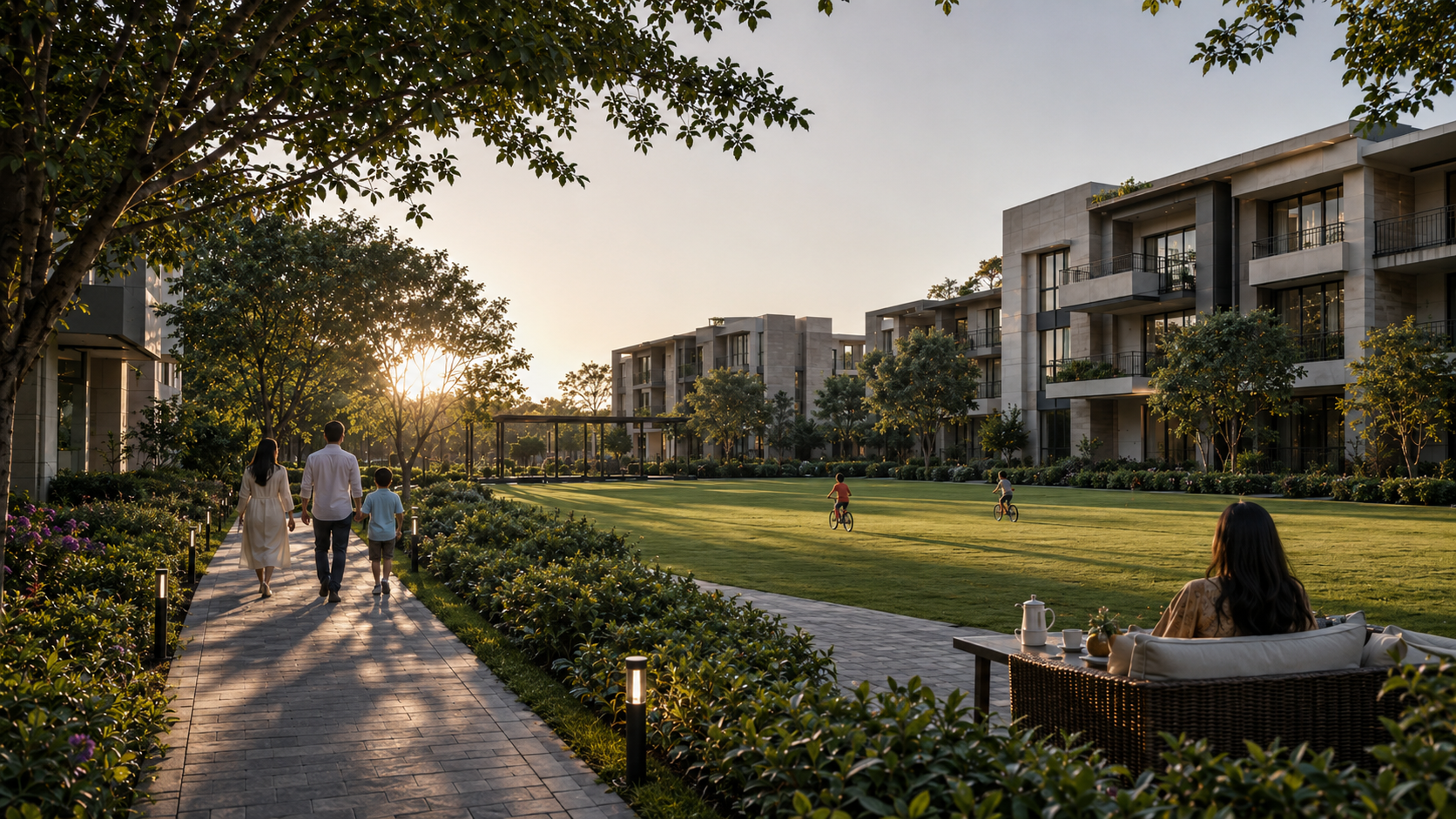
A shaded pathway becomes an evening ritual for a family. A stretch of lawn transforming into an impromptu cricket ground is almost canonical. A cluster of trees becomes the backdrop for conversations, celebrations and quiet moments alike.
For children, these spaces become even more significant.
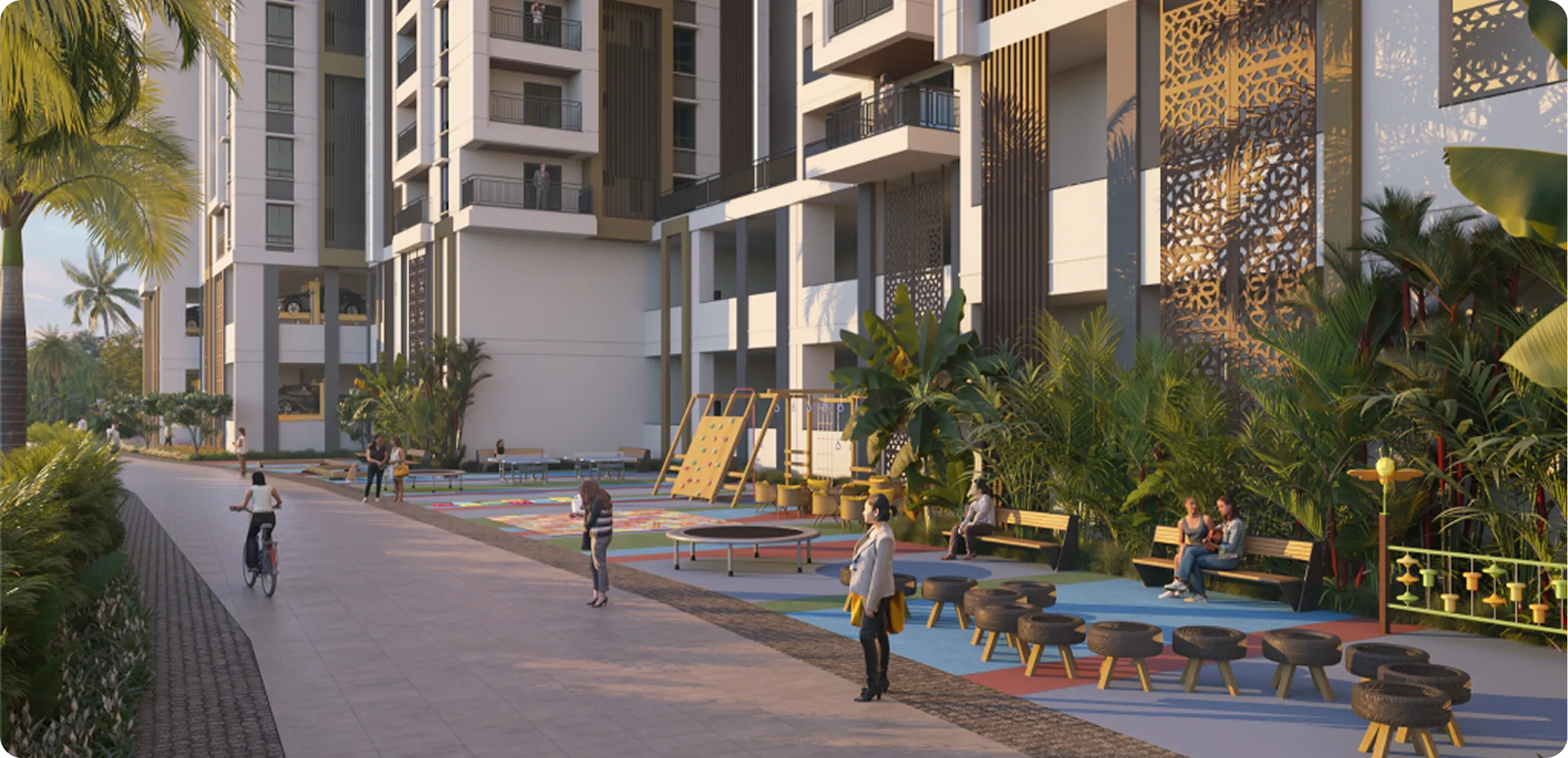
Unstructured outdoor play encourages curiosity, imagination and confidence. It teaches children to navigate the world independently, build friendships naturally, and develop a lasting relationship with the environment around them. The freedom to run, climb, explore and simply be outdoors contributes not only to physical wellbeing, but to emotional and social development as well.
These are experiences that cannot be replicated within four walls.
Everyday Access Matters
Perhaps the greatest value of an outdoor space lies not in its size, but in its accessibility.
When parks, gardens and play areas are woven into the fabric of a community, spending time outdoors becomes effortless. Play will be integrated back into a child’s daily life, instead of becoming an scheduled, appointed activity. Parents can take a walk between responsibilities. A quiet moment under the open sky no longer needs to be planned for; it simply becomes part of the day.
Over time, these small routines shape healthier habits and stronger relationships with the spaces around us. They encourage movement over sedentary living, spontaneous interaction over isolation, and a lifestyle where being outdoors feels natural rather than occasional.